

We provide specialized winterization services to safeguard your pool during the off-season, and when spring arrives, we handle the thorough opening process.


Sign Up to get updates & news about us . Get Latest Deals from Walker's Inbox to our mail address.
Sign Up to get updates & news about us . Get Latest Deals from Walker's Inbox to our mail address.
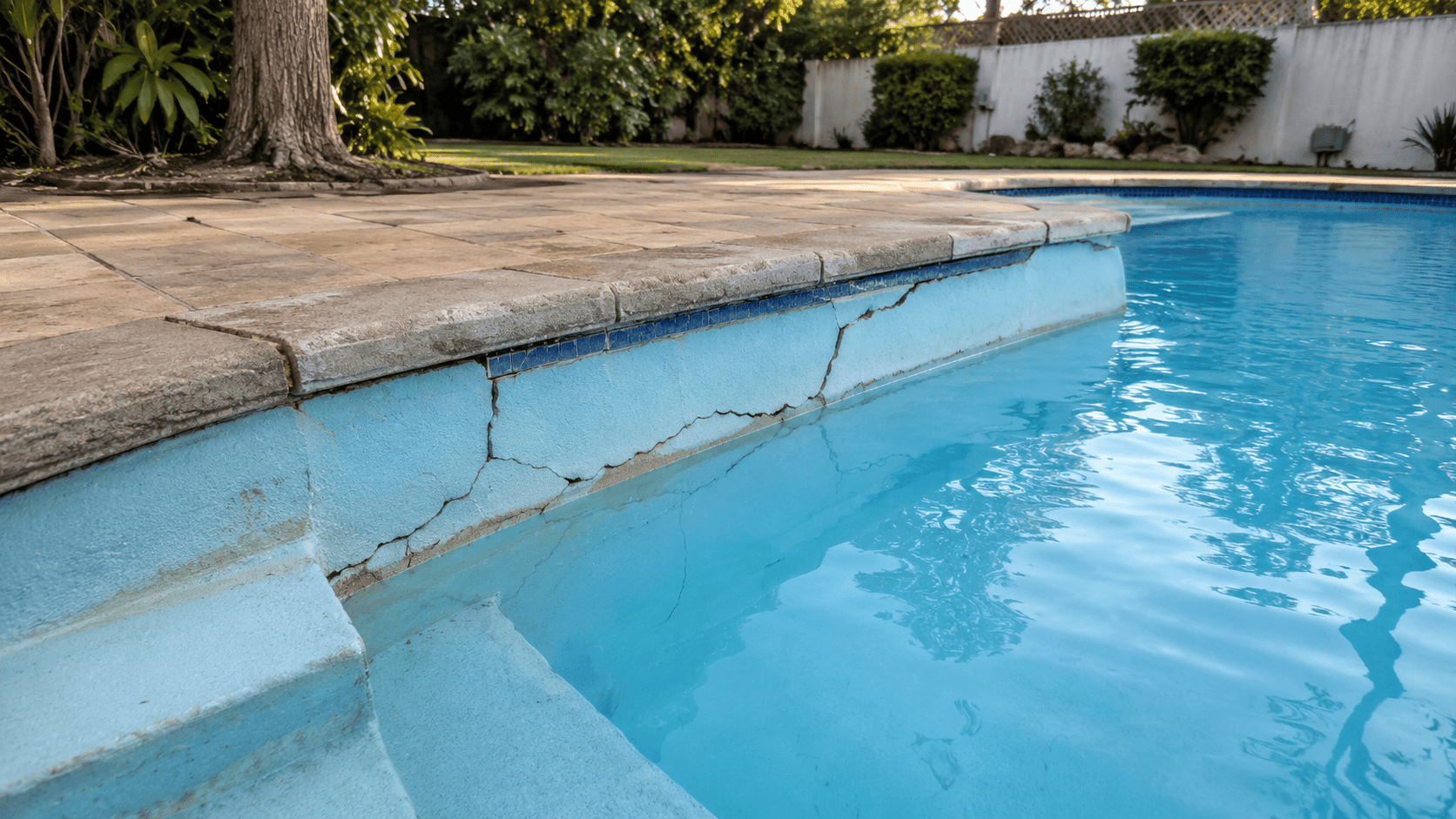
Have you found cracks in your swimming pool or noticed water escaping through a damaged surface? Absolute Pools assesses and repairs pool cracks according to their location, severity and underlying cause.
A crack in a swimming pool can be a minor surface defect or a sign of movement within the pool shell. Understanding the difference is important because covering a structural crack with a cosmetic patch may only hide the problem temporarily.
Absolute Pools provides pool crack repairs for homeowners, estates, residential complexes and commercial properties. We assess the visible crack, surrounding surface, water level and pool structure before recommending an appropriate repair.
Some cracks remain dry and stable, while others allow water to escape or continue opening after previous repairs. The position, direction and condition of the crack can help indicate whether the damage is limited to the surface or connected to a broader structural problem.
Our pool crack and structural repair service is operated by Absolute Pools, providing access to an experienced team for crack assessment, leak repairs, resurfacing and complete pool restoration where necessary.
Surface cracks are generally limited to the pool finish. They may appear in Marbelite, plaster, coatings or the outer layer of a fibreglass lining without extending through the main pool shell. These cracks can affect the appearance of the pool and may eventually allow moisture to reach the material underneath.
Structural cracks extend into the concrete, gunite or supporting shell of the swimming pool. They may run across the floor, travel vertically along a wall or develop around steps, skimmers and other openings. Structural movement can also affect coping, mosaics and surrounding paving.
The appearance of a crack alone does not always reveal how serious it is. A narrow crack may still be leaking, while a wider surface mark may be limited to the finish. Recurring cracks are particularly important to investigate because they may indicate movement that has not been addressed.
An assessment helps determine whether the crack needs a localised surface repair, a more substantial shell repair or additional work to stabilise the affected area.
Fill in the form below and tell us where the crack is located, when you first noticed it and whether the pool is losing water. Our team will contact you to discuss the next step.
Swimming pools can crack because of ground movement, soil settlement, water pressure, ageing materials or weaknesses within the original pool structure. The cause may also involve conditions around the pool rather than the visible crack itself.
Water escaping through another leak can gradually wash away supporting soil beneath paving or around the pool shell. This can create cavities and movement that place additional pressure on the structure. Sunken paving or unstable coping near a cracked area may therefore be connected to the same underlying problem.
Changes in moisture levels around the pool can cause certain soils to expand, contract or settle. Heavy rainfall, poor drainage and water collecting near the pool may contribute to movement, especially where the surrounding ground was not adequately supported.
Cracks can also develop around skimmers, steps, pool lights, return fittings and other openings in the shell. These areas contain joins between different materials and may respond differently to movement or pressure.
In some cases, the visible damage is limited to an ageing Marbelite or fibreglass finish. The surface must still be inspected carefully before deciding that the pool shell underneath is unaffected.
A crack should be assessed when it is accompanied by water loss, damp ground, sinking paving, loose mosaics or movement along the pool edge. Cracks that continue growing, return after previous repairs or extend from the floor into the wall may also require closer investigation.
Water settling at the same level as a visible crack can indicate that the damaged area is leaking. However, the pool may also have a separate leak in the plumbing or fittings, so the crack should not automatically be assumed to be the only source of water loss.
Changes around the pool can provide additional warning signs. Coping that has shifted, gaps opening between the pool and paving, hollow areas beneath pavers or cracks appearing in nearby surfaces may indicate movement beyond the interior finish.
Early assessment can help prevent repeated temporary repairs and determine whether the damage is localised or part of a wider structural problem.
The assessment begins with the visible crack, its position and the surrounding surface. We consider whether the crack is limited to the finish, whether it appears to continue into the shell and whether there are signs of movement elsewhere around the pool.
We also discuss when the crack first appeared, whether it has changed and whether previous repairs have failed. Information about water loss, recent construction, heavy rainfall, drainage problems or movement in the surrounding paving can help build a clearer picture.
Where the pool is losing water, leak detection may be needed to determine whether the crack is leaking or whether the water loss originates from plumbing, fittings or equipment. The correct investigation depends on the pool type and the symptoms present.
Once the condition is understood, we can recommend a repair suited to the crack and its underlying cause. The work may involve preparing and repairing the damaged area, stabilising the affected section and restoring the pool finish. More extensive damage may require broader structural work, resurfacing or relining.
Fill in the form below and tell us where the crack is located, when you first noticed it and whether the pool is losing water. Our team will contact you to discuss the next step.
Marbelite cracks may be confined to the interior finish or extend into the concrete shell underneath. Small surface defects may be suitable for localised repair, while widespread cracking, hollow areas or recurring damage may require resurfacing or complete re-Marbelite.
Concrete and gunite pools can develop cracks through the floor, walls, corners or areas around fittings. The repair approach depends on whether the crack is stable, leaking or connected to movement within the structure.
Fibreglass pools and fibreglass-lined pools may develop cracks, blisters, lifting sections or damage around fittings. The lining and supporting structure must be assessed before deciding whether the problem needs a focused fibreglass repair or more extensive relining.
The completed repair should address both the damaged area and the surrounding finish. This helps restore the appearance of the pool while reducing the risk of covering a problem that still requires structural attention.
A localised crack repair may be sufficient when the damage is stable and limited to a small area. Additional work may be necessary when the crack is leaking, continues to move or forms part of wider deterioration across the swimming pool.
Leak detection may be recommended when the pool is losing water and the source cannot be confirmed visually. This helps distinguish a leaking crack from problems involving underground pipes, skimmers, lights, fittings or pool equipment.
Resurfacing may be appropriate when the surrounding Marbelite or fibreglass finish is rough, hollow, faded or extensively damaged. Repairing one crack without restoring a failing surface may leave the rest of the pool vulnerable to further deterioration.
A complete pool renovation may be more practical when structural repairs need to be combined with resurfacing, plumbing, coping, paving or equipment upgrades. We explain the findings so that you can understand whether the pool needs a targeted crack repair or a broader restoration.
The cost of repairing a pool crack depends on its location, length, depth and cause. A small surface crack will have a different repair scope from damage extending through the pool shell or affecting several areas.
The pool type and existing finish also influence the quotation. Restoring Marbelite, concrete or fibreglass after the crack has been repaired requires different preparation, materials and finishing work.
Water loss, movement in the surrounding paving, access to the damaged area and any previous unsuccessful repairs must also be considered. If the underlying cause involves drainage, soil support or broader structural movement, additional work may be required before the surface can be restored.
An inspection allows us to recommend and quote for the work required instead of estimating from the visible crack alone.
Fill in the form below and tell us where the crack is located, when you first noticed it and whether the pool is losing water. Our team will contact you to discuss the next step.
Absolute Pools focuses on diagnosing and repairing problems affecting existing swimming pools. Our crack and structural repair service is operated by Absolute Pools, allowing structural work to be coordinated with leak detection, resurfacing, relining and pool renovation where necessary.
We do not assume that every visible crack requires the same solution. The pool, surrounding area and signs of movement are assessed before a repair is recommended.
If the crack is limited to the surface, we can recommend a focused repair. If it is leaking or connected to structural movement, we can explain the broader work needed to restore the affected area properly.
We provide pool crack and structural repair services throughout Midrand, including Vorna Valley, Halfway House, Halfway Gardens, Midridge Park, Noordwyk, Erand Gardens, Carlswald, Carlswald Estate, Carlswald North Estate, Country View, Sagewood, Summerset, Savannah Hills Estate, Crowthorne, Blue Hills, Blue Hills Equestrian Estate, Kyalami, Kyalami Estate, Kyalami Hills, Kyalami Gardens, Kyalami Glen Estate, Beaulieu, Glenferness, Glen Austin, President Park, Randjesfontein, Waterfall, Waterfall Country Estate, Waterfall Equestrian Estate, Waterfall Hills, Waterfall Valley, Barbeque Downs, Helderfontein Estate, Olifantsfontein and Clayville.
Our service area also extends to Sandton, Fourways, Fourways Gardens, Lonehill, Magaliessig, Craigavon, Beverley, Douglasdale, Broadacres, Dainfern, Cedar Lakes, Steyn City, Chartwell, Jukskei Park, Olivedale, North Riding, Sunninghill, Paulshof, Bryanston, River Club, Rivonia, Edenburg, Woodmead, Buccleuch, Morningside Manor, Wendywood, Gallo Manor, Morningside, Sandown, Strathavon, Parkmore, Benmore Gardens, Hyde Park, Sandhurst, Hurlingham, Atholl, Inanda, Illovo, Rosebank, Randburg, Ferndale, Bromhof, Boskruin, Randpark Ridge, Sundowner, Sharonlea, Northwold, Northcliff, Blairgowrie and Bordeaux.
We also assist customers in Centurion, Midstream Estate, Midstream Ridge, Midstream Meadows, Midstream Heights, Midfield Estate, Midlands Estate, Irene, Irene Farm Villages, Southdowns Estate, Highveld, Eco Park, Centurion Golf Estate, Blue Valley Golf Estate, Kosmosdal, Rooihuiskraal, Rooihuiskraal North, The Reeds, Amberfield, Louwlardia, Doringkloof, Die Hoewes, Zwartkop, Hennopspark, Clubview, Lyttelton, Eldoraigne, Wierda Park, Pierre van Ryneveld and Cornwall Hill.
Additional areas we serve include Modderfontein, Greenstone Hill, Linbro Park, Longmeadow, Thornhill Estate, Edenvale, Edenglen, Eastleigh, Dowerglen, Dunvegan, Marais Steyn Park, Hurlyvale, Illiondale, Isandovale, Bedfordview, Bedford Gardens, Morninghill, Senderwood, Kempton Park, Glen Marais, Birchleigh, Norkem Park, Van Riebeeck Park, Birch Acres, Terenure, Edleen, Allen Grove, Aston Manor, Bonaero Park and surrounding areas.
If you have discovered cracks in your swimming pool, contact Absolute Pools to arrange an assessment. We can inspect the damaged area and recommend a suitable repair based on the pool type and condition.
Fill in the form below and tell us where the crack is located, when you first noticed it and whether the pool is losing water. Our team will contact you to discuss the next step.